From Avalonia to Dioxus: Why I'm Rebuilding MythFlow in Rust
Why MythFlow Exists
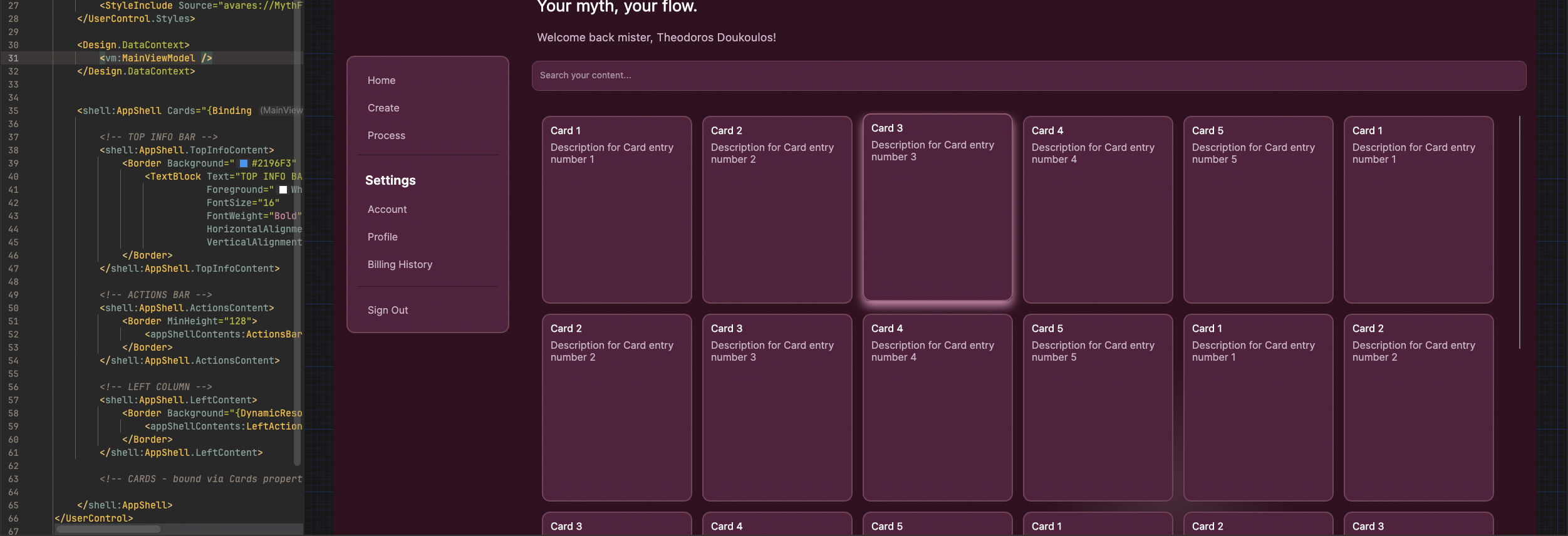
The screenshot above is from MythFlow, an Avalonia app I've been working on for roughly a year. Not just technically, but conceptually too, trying to shape it into an actual product.
The idea behind it came from a simple frustration: the way people share information today is too tightly bound to large social media platforms. And the reason for that, I think, is that for a long time there wasn't a real alternative. After watching how these platforms have been handling and manipulating our data, I became convinced there has to be a different way. One that respects our personal lives and doesn't constantly leach on our data to generate revenue.
That's why I started building MythFlow. The entire stack was .NET: an Avalonia frontend with an ASP.NET Core backend. But then some changes in my life and work shifted how I wanted to approach the project. After a pause and after spending a significant amount of time learning Rust on the side, I started to feel that Rust might be a better home for something like this.
The reasoning? The Borrow Checker. Yes, I said that. It felt like a natural fit for building features you can ship and nearly forget about. How can you forget about a feature and not expect it to break? Fair question. But we've all seen features break across many platforms even when nobody touched them. The Borrow Checker and the Rust compiler create an environment where that kind of silent regression is far less likely. For a product that's meant to last and that people are meant to trust, that matters.
Love at First Sight with Dioxus
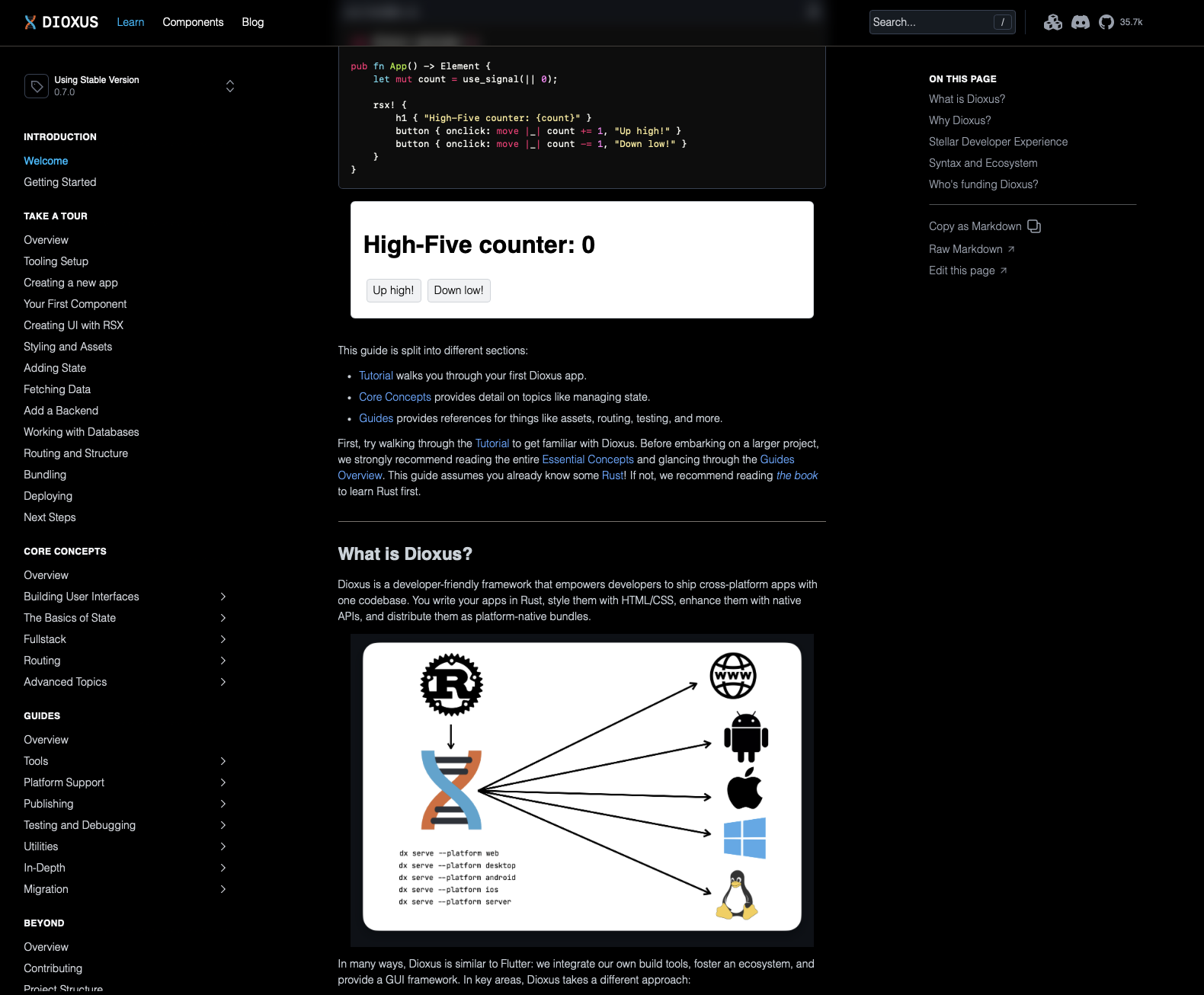
I started looking at what was out there for building UIs in Rust. Tauri, Dioxus, and a few others, each trying to bridge the gap between Rust's backend strengths and frontend needs. I tested Tauri first since it felt like the easier entry point. Then I tried Dioxus.
I think it was love at first sight.
It felt like React. Really, genuinely like React. The component model, the hooks, the signal-based reactivity. As someone who's spent years writing React and TypeScript professionally, this was a very familiar pattern, and I believe it eases the learning curve significantly. I'm not a Rust expert. I don't feel like one, and I think that's how I'll always approach any stack. There's always more to learn. But precisely because of that familiarity, I could see the potential immediately. Dioxus doesn't force you to abandon established patterns from your previous stack. It meets you where you are.
I also noticed it was already trusted by companies like Y Combinator, Airbus, and Cognition. People at those companies must have seen something important. My gut feeling was triggered and I wanted to see more. I checked the Discord server. Active. I checked the repositories. Serious, significant work. At that point I knew there was no way I wasn't going to try.
The first hello world was probably the most complicated one I've ever had to write. The initial setup has a bit of a learning curve. But once you push past that surface layer, it becomes very understandable. Kudos to everyone who's contributed to the project. The concepts Dioxus has already implemented feel very well polished for a framework at this stage. I decided I was going to invest in it and start driving things forward.
What Comes Next
Enough with the praise, though I do mean all of it. Back to the original point: building a small, independent tool that lets people share their thoughts without handing their data to a platform that profits from it.
I'm staying with that idea. The early blogging era gave us the freedom to create our own spaces in many different ways. That's changed. People now use LinkedIn, Facebook, Twitter, or whatever else for their writing. I've done it myself. But I've decided to move forward with rebuilding this project in Dioxus and Rust.
Let's see where it leads. It's an interesting moment for developers right now, and I think this is the path I want to follow: writing code that is able to withstand the length of time.